

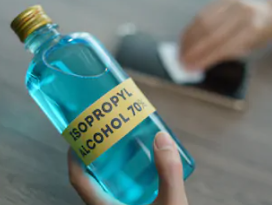
For this second formulation, you will need the following reagents:
– Isopropyl alcohol 99.8 percent
– Hydrogen peroxide 3 percent
– Glycerol 98 percent
– Either sterile distilled water or boiled cold water
You will also need some materials other than the chemicals for preparing the hand sanitizer.
You will need one of the following items, depending on the quantity of hand sanitizer you intend to make. These containers will allow for the solution to be mixed without your needing to worry that it will overflow:
– 500 mL plastic or glass bottles with stoppers or tops that have screw threading, or
– 1 L plastic or glass bottles with stoppers that have screw threading, or
– 5 L plastic or glass bottles with stoppers that have screw threading, or
– 10 L plastic or glass bottles with stoppers that have screw threading, or
– 50 L tanks made of plastic (preferably in high-density polyethylene or polypropylene and translucent so that you can see the level of the liquid contained within), or
– Tanks made from stainless steel with a capacity of 80 to 100 L
You may also need the following items:
– Wooden, metal, or plastic paddles which will be used to mix the hand sanitizer solution
– Measuring jugs and measuring cylinders
– Metal or plastic funnel
– 100 mL plastic bottles with tops that are leakproof
– 500 mL plastic or glass bottles with tops that screw on
– An alcoholometer in which the temperature scale resides at the bottom of the meter and the isopropyl alcohol concentration is at the top of the meter
Please take note of the following useful information provided by the WHO about this formulation:
The 98 percent glycerol in the formulation functions as a humectant (a substance which serves to retain or preserve moisture), but other emollients (substances which serve to soothe or soften the skin) may be utilized in the formulation for skincare, as long as these emollients are widely available, cheap, and able to be mixed with both alcohol and water. Such emollients also should not make the solution toxic or cause an allergic reaction.
The 3 percent hydrogen peroxide in the formulation functions to inactivate any bacterial spores in the solution, which may be contaminating it. The hydrogen peroxide itself should not be considered as an active ingredient in terms of sanitizing your hands.
Any further additive to the formulation ought to be labeled clearly, and it should also be non-toxic in case the hand sanitizer solution is accidentally ingested.
If you wish, you can add a colorant to the hand sanitizer solution in order to allow it to be easily differentiated from other colorless fluids. However, any such colorant ought not to make the solution toxic, promote an allergic reaction, or hinder or otherwise interfere with the antimicrobial properties of the hand sanitizer solution. The WHO does not recommend that any dyes or perfumes be added to the solution because of the increased risk of allergic reactions to those dyes and perfumes.