

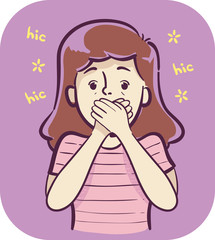
Hiccups are repetitive, uncontrollable contractions of the diaphragm muscle just below your lungs. Common cases of hiccups are triggered by lifestyle factors and can be usually prevented by making some changes in your habits. It happen when your diaphragm begins involuntarily contract. Diaphragm is a large muscle that helps you breathe in and out. It suddenly leads to vocal cords snap shut which causes a peculiar sound.Eating too much or too quickly, carbonated drinks,spicy foods,stress and being exposed to quick changes in temperature can be some of the reason for hiccups.
Most cases of the hiccups go away within a few minutes or hours but some cases of hiccups are stubborn. When this happens visit doctor for medication to help them stop.

• Inhale a large gulp of air and hold it for about 10 to 20 seconds, then breathe out slowly. Repeat.
• Lean or bend forward to compress your chest, which puts pressure on your diaphragm.
• Pulling on your tongue stimulates the nerves and muscles in your throat. Grab the tip of your tongue and gently pull it forward once or twice.
• Squeeze your palm by using your thumb to apply pressure to the palm of your other hand.
• Slowly sipping cold water may help stimulate the vagus nerve.
• Drink from the opposite side of the glass by tucking the glass up under your chin to drink from the far side.
• Drink a glass of warm water without stopping to breathe.
• Cover a glass of cold water with a cloth or paper towel and sip through it.
• Suck on the ice cube for a few minutes or gargle ice water for 30 seconds. Repeat as necessary.
• Eat a spoonful of honey or peanut butter and allow it to dissolve in your mouth a bit before swallowing.
• Put a pinch of granulated sugar on your tongue and let it sit there for 5 to 10 seconds and then swallow.
• Add a bit of salt to the lemon slice. Rinse out your mouth with water to protect your teeth from the citric acid.
• Putting a drop of vinegar on your tongue might help
• Rubbing the skin at the back of your neck may stimulate your phrenic nerve.
• Hiccups often go away on their own when you stop focusing on them.